
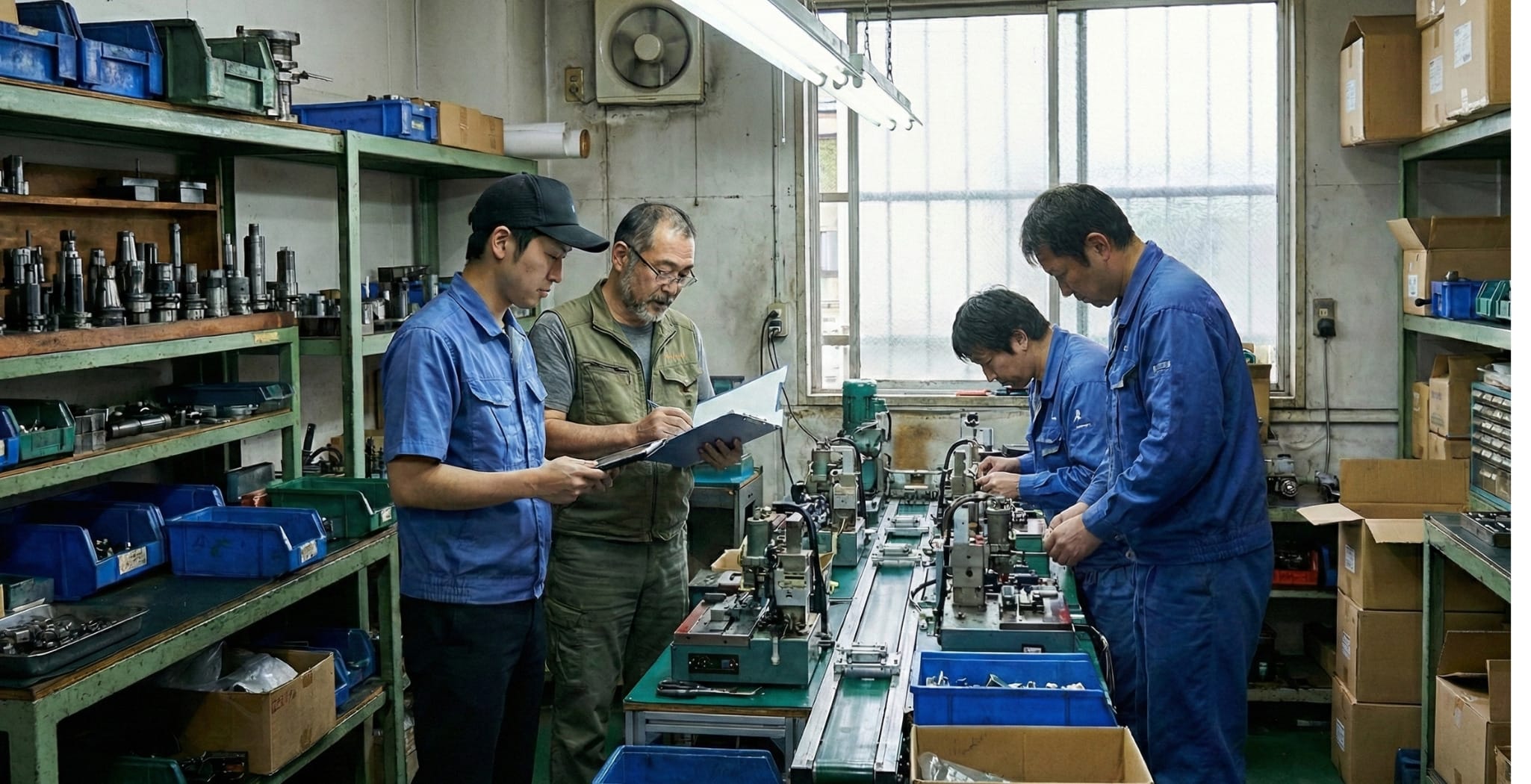
For private equity operating partners, the first questions after an acquisition are often predictable: Where can we improve margins? How quickly can we accelerate growth? What operational risks threaten the investment thesis?
When a portfolio company depends on contract manufacturing in China, one of the most consequential answers lies in an area that is frequently underestimated—factory due diligence.
Too often, supplier selection is treated as a procurement exercise driven by price, production capacity, and certifications. In reality, selecting, evaluating, and continuously monitoring manufacturing partners is a strategic operating discipline that directly affects revenue growth, gross margins, working capital, customer satisfaction, and ultimately enterprise value.
Whether introducing a new product, replacing an underperforming supplier, or diversifying the supply base to reduce concentration risk, factory due diligence determines whether a value creation plan accelerates—or stalls.
Manufacturing Is No Longer Just a Cost Center
Manufacturing decisions have become increasingly strategic. Portfolio companies are under pressure to launch products faster, improve quality, reduce supply chain risk, and maintain flexibility in an increasingly dynamic global marketplace.
Operating partners often encounter three common situations:
- A portfolio company is launching an entirely new product platform.
- Existing suppliers are experiencing recurring quality or delivery issues.
- Leadership wants to reduce supplier concentration without sacrificing purchasing leverage or operational efficiency.
Each scenario requires finding and qualifying new manufacturing partners.
Identifying a capable factory is relatively easy. Determining whether that factory can consistently deliver quality, support engineering changes, protect intellectual property, and scale production profitably is considerably more difficult.
That is where comprehensive factory due diligence becomes a competitive advantage—a discipline explored further in our manufacturing insights for private equity operating partners.
Speed to Market Creates Revenue. Delay Destroys It.
Every month a successful product reaches the market ahead of schedule represents an opportunity to capture additional revenue, establish market share, and strengthen customer relationships.
Manufacturing delays, by contrast, have consequences that extend well beyond a missed production schedule. Delayed launches often result in:
- Lost revenue opportunities
- Reduced competitive advantage
- Increased engineering costs
- Missed retailer or customer commitments
- Lower confidence from investors and management teams
Many new product introductions fail to meet revenue expectations not because demand is lacking, but because manufacturing readiness was overestimated. Experienced manufacturing teams understand that prototype success and production success are not the same.
Factory due diligence verifies that a supplier possesses not only equipment and capacity, but also robust engineering processes, process controls, quality systems, supply chain resilience, and the management discipline necessary for sustained production.
For operating partners responsible for executing growth initiatives, reducing launch risk can be just as valuable as reducing manufacturing costs.
Quality Problems Cost Far More Than Scrap
Every manufacturer expects occasional defects. What destroys enterprise value is not isolated quality issues—it is systemic quality failure.
Poor supplier qualification frequently results in:
- Customer returns
- Production interruptions
- Warranty expense
- Increased field service costs
- Lost future orders
- Damage to long-standing customer relationships
The most severe consequence is a product recall. A recall creates immediate financial costs through logistics, replacement products, inventory write-offs, legal exposure, and regulatory compliance. More importantly, recalls damage something much harder to rebuild: customer trust.
The numbers bear this out: Lockton’s analysis of private equity recall exposure found that the goodwill lost in a recall can run as much as twelve times the direct costs of the recall itself. For many brands, reputation represents years of investment—and one poorly manufactured product can undo that loyalty in a matter of weeks.
Operating partners understand that protecting the brand is protecting enterprise value. Thorough factory due diligence significantly reduces this risk by evaluating manufacturing capability before problems reach customers.
Diversification Without Losing Purchasing Power
Many portfolio companies recognize the danger of relying on a single supplier. Supplier concentration creates operational risk during:
- Capacity shortages
- Political uncertainty
- Natural disasters
- Labor disruptions
- Financial instability
The obvious solution is supplier diversification. However, diversification should not eliminate the purchasing advantages created through consolidated volume.
The case for diversification is more than intuition—research published in the Journal of Supply Chain Management confirms that firms which diversify their supplier base build measurably more resilience without sacrificing operational efficiency.
An experienced manufacturing partner can identify complementary suppliers capable of producing similar products while coordinating sourcing strategies that preserve purchasing leverage across multiple manufacturers. Rather than placing “all of the eggs in one basket,” companies create redundancy without sacrificing economies of scale.
Done correctly, diversification becomes a strategic risk management initiative—not simply adding more vendors.
China Cannot Be Managed from a Conference Room
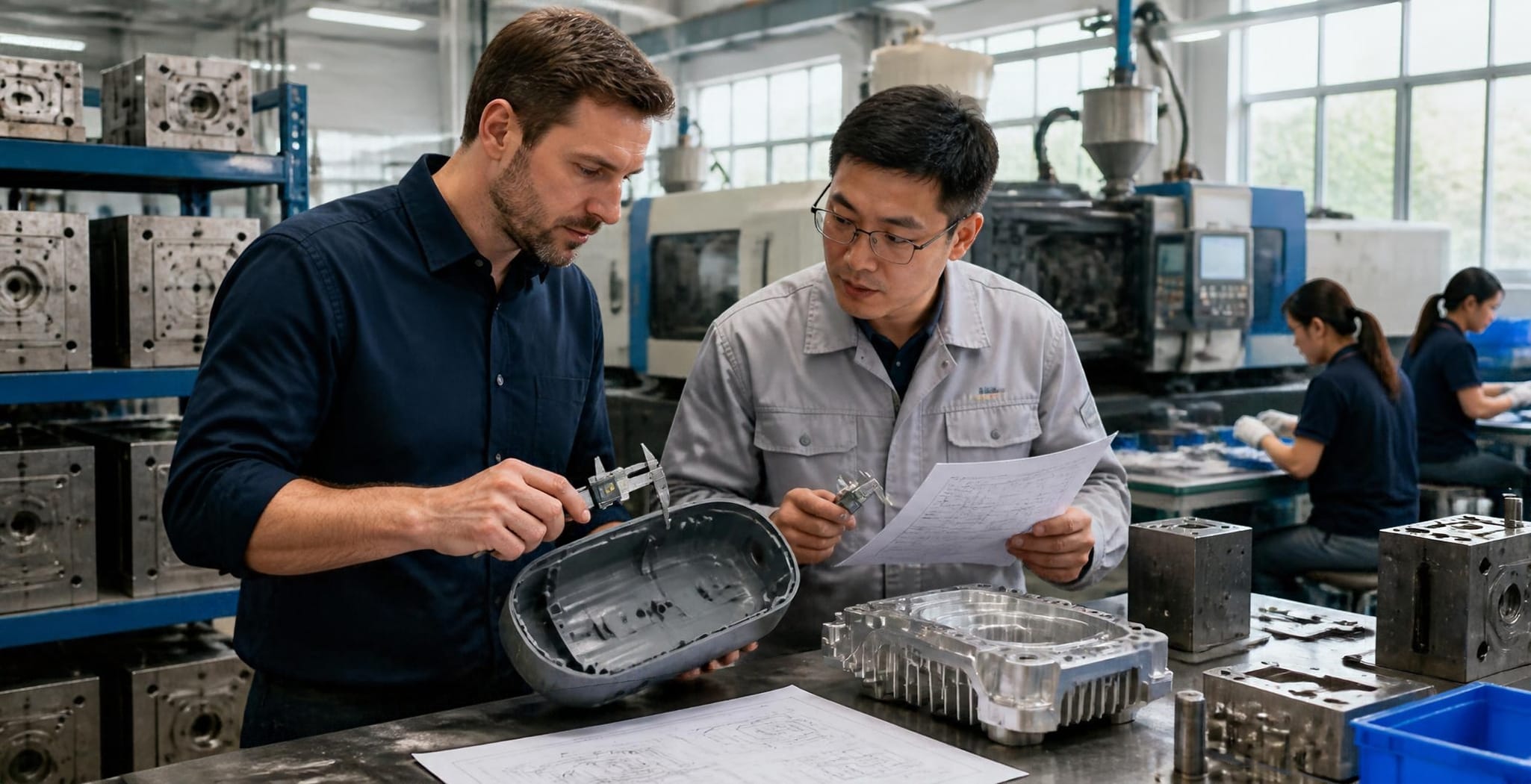
One of the largest misconceptions surrounding contract manufacturing is that supplier qualification can be accomplished remotely. Datasheets, certifications, and virtual factory tours provide useful information. They do not reveal:
- Actual production discipline
- Operator training
- Process consistency
- Equipment maintenance
- Workplace organization
- Supplier culture
- Engineering collaboration
- Real quality practices
These realities are only visible on the factory floor, which is why on-the-ground factory audits and pre-shipment inspections remain essential, not optional.
China remains one of the world’s most sophisticated manufacturing ecosystems, but it is also highly regional. Manufacturing capability is concentrated in specialized industrial clusters. For example:
- Shenzhen continues to lead in electronics, consumer technology, and rapid product development.
- Dongguan has extensive capabilities in plastics, metal fabrication, and consumer products.
- Ningbo and Zhejiang offer strengths in industrial manufacturing, hardware, and precision machining.
- Suzhou and the Yangtze River Delta support advanced manufacturing, medical devices, and precision engineering.
- Xiamen has developed expertise in sporting goods, consumer products, and engineered components.
Understanding where these manufacturing ecosystems exist dramatically shortens supplier searches and improves qualification accuracy. This local knowledge cannot be replicated through internet searches alone.
Internal Engineering Resources Are Often Better Utilized Elsewhere
Many portfolio companies possess excellent engineering talent. That expertise should remain focused on activities that create competitive advantage:
- Product innovation
- Customer support
- Manufacturing optimization
- Continuous improvement
Using senior engineers to spend weeks traveling internationally to identify and audit factories is often an inefficient allocation of highly compensated talent. International supplier development requires:
- International travel
- Visa coordination
- Multiple factory visits
- Translation
- Local transportation
- Follow-up audits
- Ongoing supplier management
Each trip removes key personnel from supporting customers, engineering new products, and improving existing operations. The direct travel expenses are measurable. The opportunity cost is often much greater.
Local Presence Changes Everything
Successful supplier qualification in China depends on more than engineering expertise. It requires people who understand:
- Local business practices
- Regional manufacturing capabilities
- Cultural expectations
- Supplier reputations
- Negotiation styles
- Native-language communication
Misunderstandings frequently occur not because suppliers are unwilling to cooperate, but because expectations are interpreted differently. A bilingual engineering and quality team operating inside China dramatically improves communication speed, technical clarity, and issue resolution.
Instead of waiting overnight for translated emails or scheduling late-night conference calls across time zones, problems can be addressed immediately on the factory floor. Engineering changes happen faster. Quality concerns are investigated sooner. Production issues are corrected before they become customer issues.
For operating partners focused on execution velocity, this local responsiveness directly contributes to faster decision-making and lower operational risk.
A Trusted Local Team Extends the Portfolio Company’s Capabilities
The most effective manufacturing organizations combine internal strategic leadership with trusted local execution. An experienced on-the-ground team of Chinese-speaking engineers and quality professionals effectively becomes an extension of the portfolio company’s operations organization. They provide:
- Factory identification and qualification
- Manufacturing due diligence
- Supplier audits
- Quality system evaluations
- New Product Introduction (NPI) support
- Production launch oversight
- Corrective action management
- Ongoing supplier performance monitoring
Instead of reacting to manufacturing problems after products reach customers, operating partners gain continuous visibility into factory performance before issues affect revenue or reputation.
Factory Due Diligence Is a Growth Strategy
Factory due diligence is often viewed as an operational necessity. It should instead be viewed as a value creation capability. The right manufacturing partner accelerates product launches, improves quality, protects customer relationships, and creates flexibility across the supply chain. The wrong manufacturing partner delays growth, erodes margins, consumes management attention, and damages brand equity.
For operating partners responsible for maximizing enterprise value, the question is no longer whether factory due diligence is worth the investment. The question is whether they can afford to execute a growth strategy without it.
The firms that consistently outperform are not simply finding factories. They are building resilient manufacturing ecosystems supported by experienced local teams that understand the realities of doing business in China—long before problems appear on a financial statement.

 https://baysourceglobal.com/wp-content/uploads/2026/10/china-contract-manufacturing-new-product-development.jpg
1050
2050
Shannon Kelly
https://baysourceglobal.com/wp-content/uploads/2013/04/BSG-new-logo-large1-e1426014540772.jpg
Shannon Kelly2026-10-15 16:35:572026-10-15 16:37:37Why China Is Likely to Remain a Leading Choice for New Product Contract Manufacturing
https://baysourceglobal.com/wp-content/uploads/2026/02/Baysource-Headers-6.jpg
1050
2050
dwatts
https://baysourceglobal.com/wp-content/uploads/2013/04/BSG-new-logo-large1-e1426014540772.jpg
dwatts2026-02-05 01:10:372026-07-09 13:32:31Factory Due Diligence in China: Why Operating Partners Should Treat It as a Value Creation Strategy—Not Just a Procurement Exercise
https://baysourceglobal.com/wp-content/uploads/2026/10/china-contract-manufacturing-new-product-development.jpg
1050
2050
Shannon Kelly
https://baysourceglobal.com/wp-content/uploads/2013/04/BSG-new-logo-large1-e1426014540772.jpg
Shannon Kelly2026-10-15 16:35:572026-10-15 16:37:37Why China Is Likely to Remain a Leading Choice for New Product Contract Manufacturing
https://baysourceglobal.com/wp-content/uploads/2026/02/Baysource-Headers-6.jpg
1050
2050
dwatts
https://baysourceglobal.com/wp-content/uploads/2013/04/BSG-new-logo-large1-e1426014540772.jpg
dwatts2026-02-05 01:10:372026-07-09 13:32:31Factory Due Diligence in China: Why Operating Partners Should Treat It as a Value Creation Strategy—Not Just a Procurement Exercise https://baysourceglobal.com/wp-content/uploads/2026/02/ebitda-trap-contract-manufacturing-pe-backed-companies.jpg
1050
2050
dwatts
https://baysourceglobal.com/wp-content/uploads/2013/04/BSG-new-logo-large1-e1426014540772.jpg
dwatts2026-02-05 00:47:242026-05-27 16:10:55When Cost Savings Destroy Value: The Hidden Risk of Low-Cost Contract Manufacturing
https://baysourceglobal.com/wp-content/uploads/2026/02/ebitda-trap-contract-manufacturing-pe-backed-companies.jpg
1050
2050
dwatts
https://baysourceglobal.com/wp-content/uploads/2013/04/BSG-new-logo-large1-e1426014540772.jpg
dwatts2026-02-05 00:47:242026-05-27 16:10:55When Cost Savings Destroy Value: The Hidden Risk of Low-Cost Contract ManufacturingContact Us


Follow Us