

Manufacturing executives evaluating offshore partners often prioritize unit cost over tooling capability. The logic appears sound: identify the lowest quote, negotiate terms, then address technical details during setup. This assumption frequently proves expensive when examined against actual production outcomes.
A medical device manufacturer chose $12,000 overseas tooling over a $49,000 domestic quote to reduce upfront costs. The result: $98,500 total tooling expense after factoring flash removal, emergency production runs, and reverse engineering work—a 100% cost overrun that eliminated any savings, according to Crescent Industries analysis. The issue wasn’t the factory’s capability but rather the mismatch between design requirements and existing equipment.
The Hidden Cost of Tooling Misalignment
Factories often accept projects beyond their actual capacity, creating problems that surface only after tooling begins. A supplier may lack precision injection molding equipment for tight tolerances, or operate outdated CNC machinery unable to meet specification requirements. By the time these limitations become apparent, development schedules and capital commitments make switching suppliers impractical.
The financial impact extends beyond initial tooling costs. Production delays compound during ramp-up as factories attempt workarounds for equipment limitations. Quality issues emerge from processes never designed for the application. Defect rates increase, requiring manual rework that eliminates labor cost advantages. Manufacturing quality control solutions become reactive rather than preventive, addressing problems that proper equipment matching would have avoided.
Consider injection molding tolerances. Process capability indices (Cpk) below 1.33 indicate a process barely meeting specifications. Factories lacking appropriate equipment consistently produce parts with Cpk values requiring extensive sorting and rework. When machinery doesn’t match design requirements, even skilled operators cannot overcome fundamental process limitations.
Equipment Capability as Strategic Filter
Effective contract manufacturing partnerships begin with technical fit assessment, not pricing negotiations. The evaluation framework examines three critical dimensions—equipment specifications, process expertise, and execution history. This approach identifies whether a factory possesses the tooling and systems necessary for consistent production before commercial discussions begin.
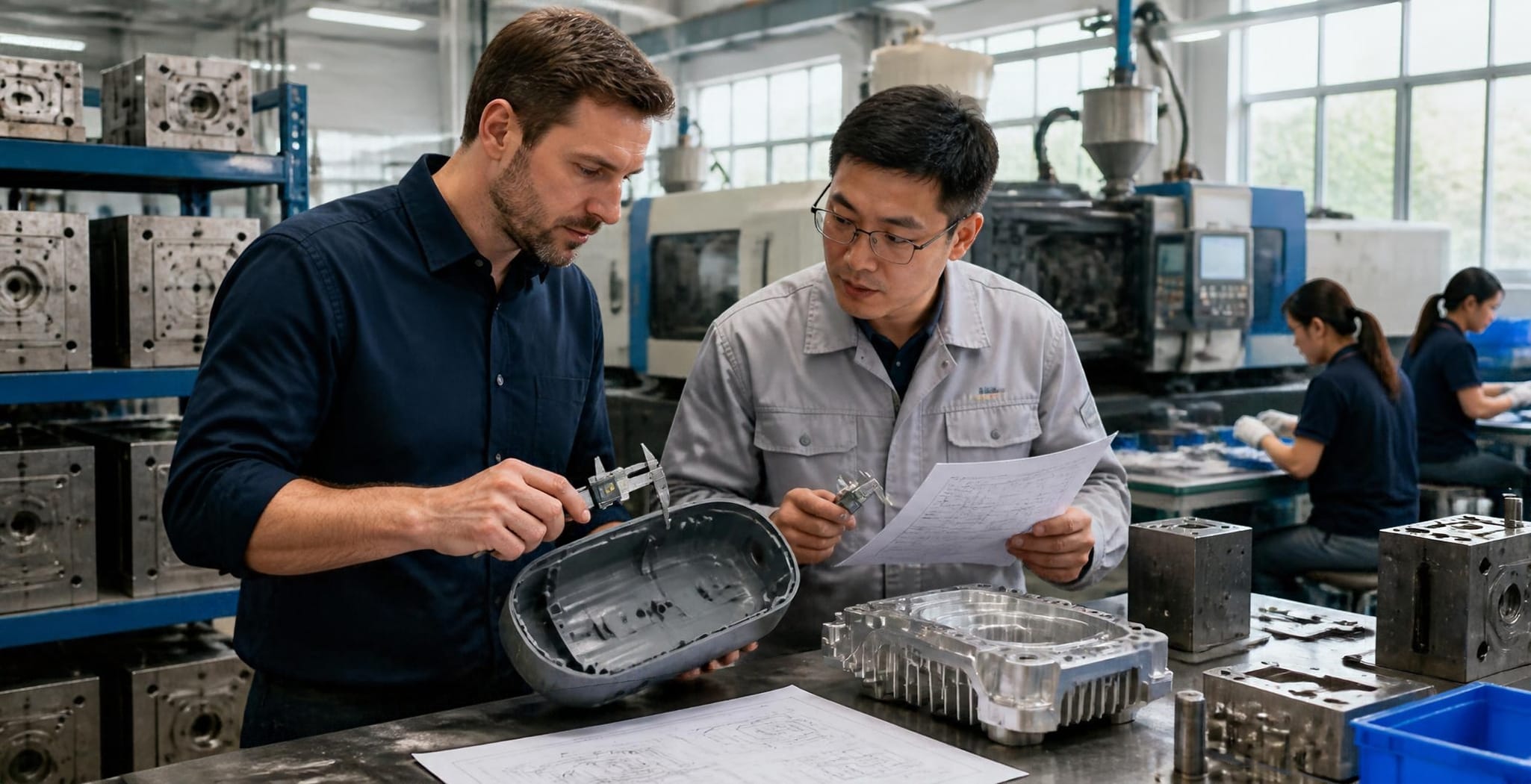
Equipment specifications reveal whether machinery can achieve required tolerances, surface finishes, and material properties. A factory claiming injection molding capability may operate molds suitable only for low-tolerance commodity parts. Their equipment specification sheets show maximum tonnage, shot capacity, and mold temperature ranges that determine whether they can actually produce precision components requiring tight process control.
Process expertise extends beyond owning equipment to understanding how to optimize it for specific applications. Factories experienced with particular materials, geometries, or quality standards bring institutional knowledge that prevents common failure modes. Conducting thorough supplier due diligence becomes critical for any manufacturing strategy, revealing whether claimed capabilities translate to actual production performance.
Execution history provides evidence of capability through documented performance. First Article Inspection (FAI) reports from similar projects demonstrate a factory’s ability to meet dimensional specifications and process requirements. Production Part Approval Process (PPAP) documentation shows whether their quality systems maintain consistency during volume manufacturing.
Integrated Capability Assessment
Baysource’s sourcing methodology treats tooling evaluation as foundational rather than supplementary. The approach prevents capability mismatches that create expensive problems during production ramp-up.
Discovery phase analysis maps technical requirements directly to necessary tooling capabilities. This includes material compatibility, surface finish requirements, dimensional tolerances, and production volume implications. The analysis identifies which manufacturing processes and equipment specifications are non-negotiable versus flexible.
Due diligence verification confirms whether potential suppliers possess compatible equipment and demonstrated expertise. Site visits examine tooling condition, maintenance records, and process validation documentation. The evaluation compares claimed capabilities against evidence from actual production history and quality system certifications.
Quoting with clarity eliminates surprises about tooling readiness. When factories quote based on existing capabilities, estimates reflect realistic production economics. Quotes requiring new tooling builds or process development include these costs explicitly rather than emerging as change orders during production.
Launch validation through FAI confirms tooling performs to specification before volume production begins. This stage catches any remaining capability gaps while production volumes remain manageable and corrective actions less expensive.
A consumer electronics manufacturer avoided $200,000 in tooling costs by identifying a factory with precision die-casting capabilities already validated through similar products. The factory’s existing equipment met dimensional requirements without modification, reducing both capital expense and lead time by 40%. Working with an experienced China manufacturing consultant can help evaluate these variables and identify the optimal manufacturing partner for your specific needs.
Strategic Advantages of Equipment Alignment
Choosing factories with compatible tooling creates measurable advantages beyond avoiding rework costs. Production ramp-up accelerates when factories build products using familiar processes and proven equipment. Quality issues decrease because process parameters are already optimized rather than experimental.
Cost estimates prove more accurate when based on established processes rather than theoretical capacity. Factories quoting from experience provide realistic timelines and identify potential challenges before they impact schedules. This visibility allows better planning and risk management throughout product development.
Supply chain resilience improves when manufacturing partners operate within their core competencies. Factories producing products aligned with their equipment and expertise maintain more consistent quality and delivery performance. They’ve already solved the technical challenges that create disruptions for suppliers working outside their experience base.
Novel products requiring unprecedented manufacturing approaches sometimes justify custom tooling investments. Breakthrough materials or new-to-world applications may have no existing matches. However, most products entering medium or high volume production can find factories with compatible existing systems. The question becomes whether to pay premium prices for custom tooling development or identify partners already equipped for the application.
Tooling as Sourcing Strategy
Offshore manufacturing location decisions increasingly depend on technical alignment rather than geographic preferences. A factory with appropriate tooling and demonstrated expertise outperforms one requiring significant process development, regardless of labor rates or proximity advantages.
The evaluation shift from cost-first to capability-first thinking prevents common sourcing mistakes. Attractive unit prices lose relevance when tooling mismatches create quality problems, delivery delays, and unexpected capital requirements. Smart sourcing identifies sourcing partners whose existing capabilities match product requirements, ensuring quoted prices reflect achievable production economics.
For companies evaluating manufacturing partners, tooling capability deserves equal weight with cost proposals and capacity claims. The factories best positioned to deliver successful production outcomes are those already building similar products with proven processes and appropriate equipment—not those promising to figure it out along the way.
 https://baysourceglobal.com/wp-content/uploads/2026/10/china-contract-manufacturing-new-product-development.jpg
1050
2050
Shannon Kelly
https://baysourceglobal.com/wp-content/uploads/2013/04/BSG-new-logo-large1-e1426014540772.jpg
Shannon Kelly2026-10-15 16:35:572026-10-15 16:37:37Why China Is Likely to Remain a Leading Choice for New Product Contract Manufacturing
https://baysourceglobal.com/wp-content/uploads/2026/10/china-contract-manufacturing-new-product-development.jpg
1050
2050
Shannon Kelly
https://baysourceglobal.com/wp-content/uploads/2013/04/BSG-new-logo-large1-e1426014540772.jpg
Shannon Kelly2026-10-15 16:35:572026-10-15 16:37:37Why China Is Likely to Remain a Leading Choice for New Product Contract Manufacturing https://baysourceglobal.com/wp-content/uploads/2026/02/Baysource-Headers-6.jpg
1050
2050
dwatts
https://baysourceglobal.com/wp-content/uploads/2013/04/BSG-new-logo-large1-e1426014540772.jpg
dwatts2026-02-05 01:10:372026-07-09 13:32:31Factory Due Diligence in China: Why Operating Partners Should Treat It as a Value Creation Strategy—Not Just a Procurement Exercise
https://baysourceglobal.com/wp-content/uploads/2026/02/Baysource-Headers-6.jpg
1050
2050
dwatts
https://baysourceglobal.com/wp-content/uploads/2013/04/BSG-new-logo-large1-e1426014540772.jpg
dwatts2026-02-05 01:10:372026-07-09 13:32:31Factory Due Diligence in China: Why Operating Partners Should Treat It as a Value Creation Strategy—Not Just a Procurement Exercise https://baysourceglobal.com/wp-content/uploads/2026/02/ebitda-trap-contract-manufacturing-pe-backed-companies.jpg
1050
2050
dwatts
https://baysourceglobal.com/wp-content/uploads/2013/04/BSG-new-logo-large1-e1426014540772.jpg
dwatts2026-02-05 00:47:242026-05-27 16:10:55When Cost Savings Destroy Value: The Hidden Risk of Low-Cost Contract Manufacturing
https://baysourceglobal.com/wp-content/uploads/2026/02/ebitda-trap-contract-manufacturing-pe-backed-companies.jpg
1050
2050
dwatts
https://baysourceglobal.com/wp-content/uploads/2013/04/BSG-new-logo-large1-e1426014540772.jpg
dwatts2026-02-05 00:47:242026-05-27 16:10:55When Cost Savings Destroy Value: The Hidden Risk of Low-Cost Contract ManufacturingContact Us


Follow Us